

North by Northwest
Delivering from Maggie to Port Douglas
A passage of 199 nautical miles up the Queensland coast
We were tied up in Nelly Bay, on the south-eastern shore of Magnetic Island, with nowhere to go. The south-east trade winds — the engine of Queensland’s sailing season — had decided to remind us who was actually in charge, keeping the sea state well beyond what made for a comfortable departure. So we waited, and in doing so, were given four bonus days in one of North Queensland’s most remarkable places.
Magnetic Island — sits just eight kilometres off the coast of Townsville.
The island is three-quarters national park, ringed by fringing coral reefs, and home to one of Australia’s largest wild koala populations. The WWII fort ruins tucked into the granite hills above are well worth the walk, offering a reminder that during 1942–43, a signal station and coastal battery were built on the island to control shipping and defend Townsville harbour.
Four days of being “stuck” in a place like this is no hardship at all.
Queensland Coast — Yacht Voyage
Nelly Bay → Port Douglas | 5 stops | GPS-accurate route
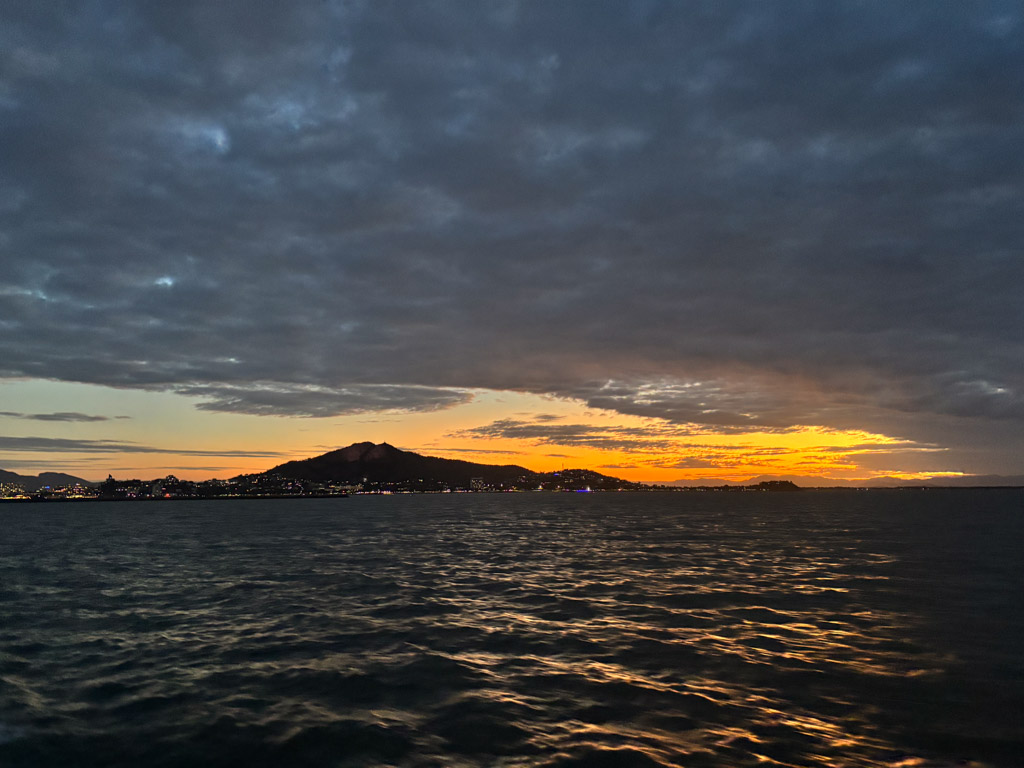


Day One — Nelly Bay to Pioneer Bay, Orpheus Island
13 May 2026 | 46 NM
With the wind finally easing to a manageable south-easterly, we slipped lines early and headed north out of Nelly Bay. Once clear of the island, Yknot found her rhythm — the trade winds were still blowing a solid 15–25 knots from the south-east, but with the wind directly behind us and the East Australian Current running in our favour at around 0.8 knots, the boat moved beautifully. This was downwind sailing as it should be: purposeful, fast, and deeply satisfying.
We passed Palm Island to our east — a significant place with a complex history — and then Fantome Island, before dropping anchor in the jewel-quiet waters of Pioneer Bay on Orpheus Island, 46 nautical miles from our start. The swell that had kept us pinned in Nelly Bay was already a memory.
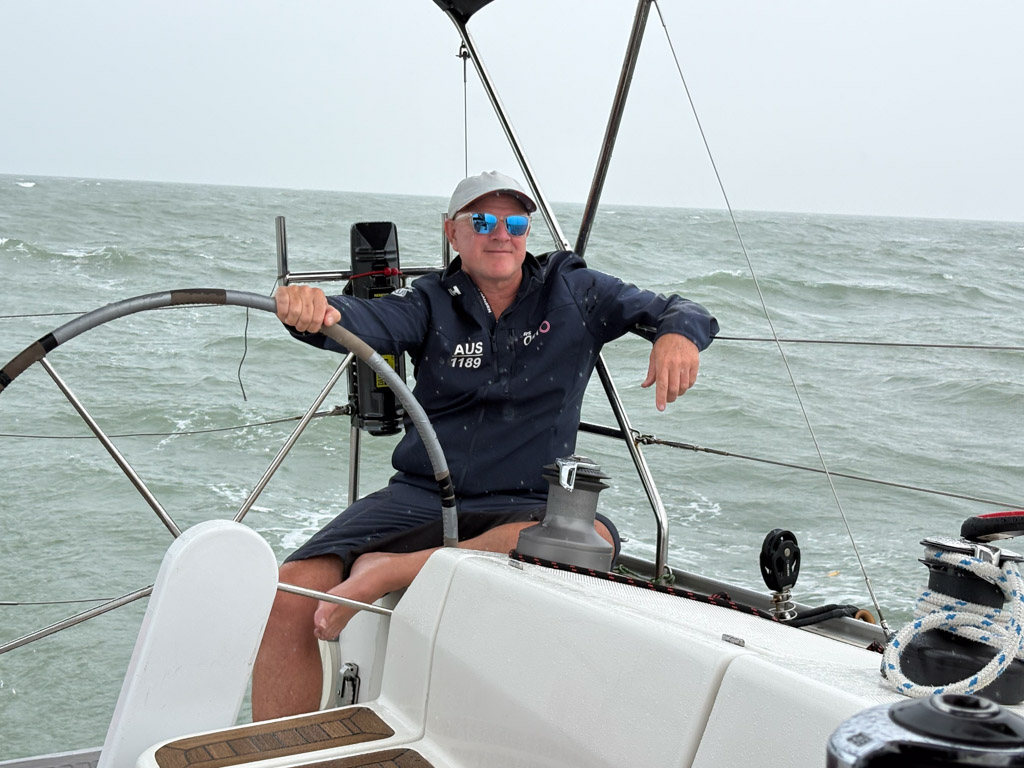

Day Two — Pioneer Bay to Brammo Bay, Dunk Island
14 May 2026 | 92 NM cumulative | 46 NM leg
Another cracking downwind run under grey skies. The weather had that heavy, brooding quality that the tropics do so well — not threatening, exactly, but insistent. We pressed on north with the trades giving us a good shove, watching the Queensland coastline scroll by to our west: the vast cane fields behind Ingham, the green wall of the Cardwell Range, the gap where Hinchinbrook Channel cuts inland.
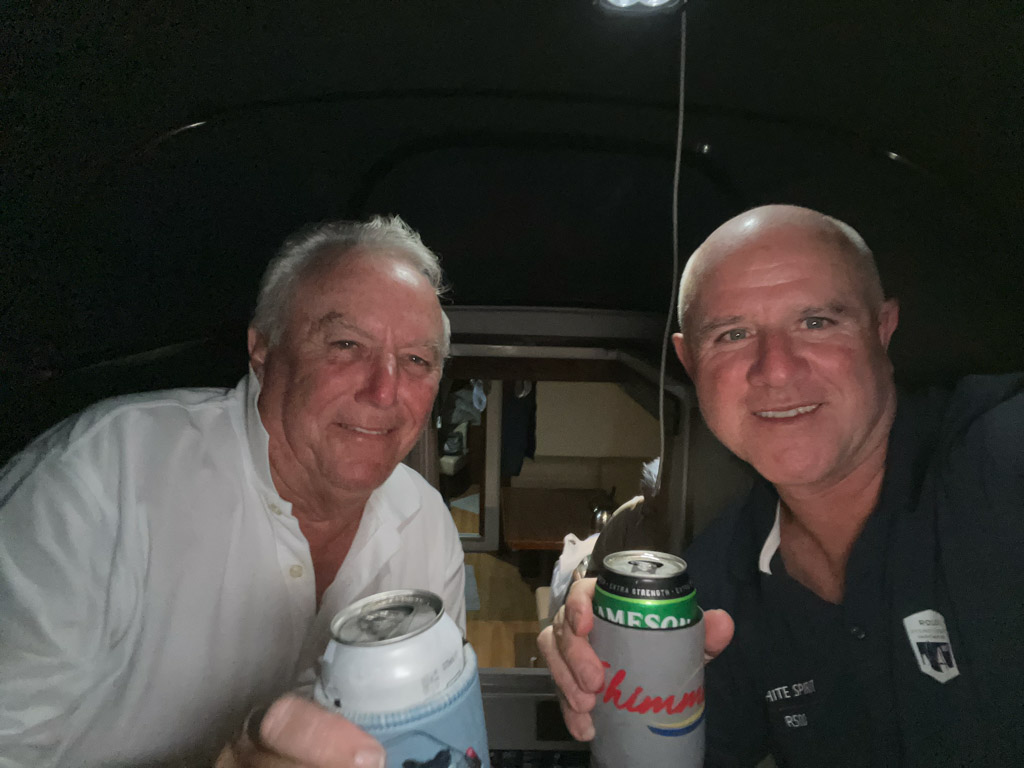
Brammo Bay on Dunk Island welcomed us with its characteristic calm anchorage on the western shore. The weather, however, was not playing ball — the bar was firmly closed. But in one of those small acts of hospitality that you remember long after the miles have faded, a staff member came down to the waterfront and opened up especially for us. Cold drink in hand, rain pattering on the roof — perfect.


Day Three — Brammo Bay to Fitzroy Island
15 May 2026 | 155 NM cumulative | 63 NM leg
The longest leg of the passage, and the most eventful below the waterline. The weather was truly ordinary — rain sheeting down for much of the run north — but Yknot doesn’t much care about rain. She cares about wind and current, and both remained firmly in our favour. We pushed past Hinchinbrook Island, rounded Cape Grafton, and eased into the anchorage at Fitzroy Island in the early afternoon with Cairns just visible across the water to the north-west.
The island was busier than we’d expected — ferries from Cairns running back and forth, daytrippers making the most of it despite the weather. But none of that mattered once I was in the water. Snorkelling in the rain has its own particular charm: the surface churned with drops, the visibility below sharp and clear. And there, moving at the unhurried pace of something that has no particular deadline, was a large green sea turtle. He seemed entirely unbothered by my presence. We swam together for a good twenty minutes — him grazing on the reef, me along for the ride — in the kind of encounter that doesn’t happen on a schedule.


Day Four — Fitzroy Island to Port Douglas
16 May 2026 | 199 NM cumulative | 44 NM leg
The final leg — short and sweet, or so it seemed. With the south-easterly still pushing us along and the current still helping, we made good time up the coast. Port Douglas appeared off the bow in the early afternoon: the distinctive headland of Island Point, the sweep of Four Mile Beach stretching south, and the entrance to Dickson Inlet tucked behind it.
This was my first time sailing into Port Douglas, and the entrance deserves respect. The harbour hasn’t been dredged in quite some time, and the channel is considerably narrower in practice than the port and starboard markers might suggest. With Yknot drawing 2.3 metres under the keel, timing the tide was not optional — we simply could not enter on a low tide. Take your time, read the water carefully, and don’t be fooled by how wide the approach looks on the chart. The route in requires you to commit to a line and hold it.
Once inside, though, Dickson Inlet opens up into one of the most charming small harbours on the Queensland coast. We tied up at the Port Douglas Yacht Club — the PDYC — and the relief of a completed delivery, the smell of the tropics, and a well-earned cold drink came together in exactly the right order.


Bonus Day — Out to Low Isles
17 May 2026
The delivery was done, but the adventure had one more chapter. We caught up with all of the crew that had arrived from around Australia for Port Douglas race week. After days of cloud and squalls, the sky had finally cleared to the deep, saturated blue that only happens in Far North Queensland when the weather decides to behave. The water was glass. The reef was spectacular.
I swam with reef sharks and tropical fish over coral gardens that seemed almost deliberately colourful, as if the reef itself was making a point. Moments like this — clear water, warm sun, life moving unhurried in every direction — have a way of recalibrating your sense of what matters. They’re also, if you’ve spent four days slogging north through rain and swell, an extremely satisfying full stop.
The bad weather, the waiting, the rain, the swell — it’s all part of it. But so is the turtle at Fitzroy Island, the impromptu drink at Dunk, the reef sharks at Low Isles, and the quiet satisfaction of arriving somewhere new under your own sail. That’s what makes the difficult days worth it.


Blogs
The Boat You Don’t Say No To
A presentation-night chat at Airlie Beach Race Week turned into an invitation most sailors would kill for — a skeleton-crew delivery of the Swan 82 Crackerjack V from Airlie to Hamilton Island, helming 82 feet of German Frers pedigree through the Whitsundays. Some boats you just don’t say no to.
Airlie Beach Race Week 2026
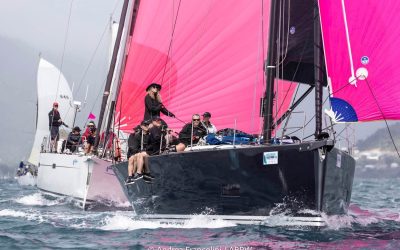
Solaris 50 Salt took on Airlie Beach Race Week 2026, leading Performance Cruising Division 1 into the final day. After six intense races through the Whitsundays, a tie-break countback handed victory to Eureka 11. Here is the story of a memorable campaign, stellar conditions, and racing decided by the narrowest of margins.
Ca Va — Hamilton Island Race Week
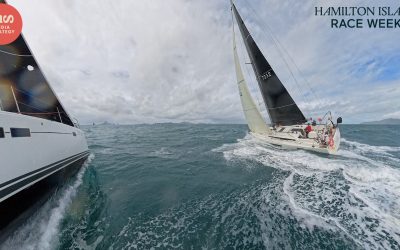
Filmed from aboard the Hanse 430 YKnot, Phil Dressler’s Jeanneau Sun Odyssey 440 Ca Va battles through the competitive Orange Division fleet at Hamilton Island Race Week 2026. Experience the close-quarters action, tactically tight racing, and stunning Whitsunday Islands scenery as these two fast-cruising yachts race side-by-side.

Racing 520 Miles North on Clockwork
Shaun McKenna joins the South Australian crew of the Sydney 38 Clockwork for the 520-nautical-mile 2026 Gold Coast to Mackay Yacht Race. Facing 30-knot southerlies, high-speed spinnaker runs, and a severe midnight broach that snapped their steering column, the team executed rapid mid-race repairs to reach Mackay Marina.

Celebrating Legacy and Grit at the 2026 ORCV Awards
Go behind the lens at Sandringham Yacht Club for the 2026 ORCV Annual Awards. This photo-driven retrospective captures the grit and triumphs of the offshore season, celebrating champions like Matt Setton and Nigel Jones while tracing the historic continuity and community defining Victorian ocean racing.
Brass Monkey Winter Pursuit
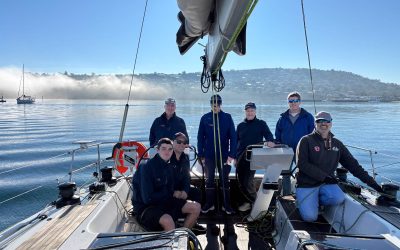
A thick winter fog at Safety Beach couldn’t stop the Shimmer campaign. With five of eight crew members aboard, the team used Race 4 of the Brass Monkey series to test a new TP52 staysail in light air. A second-place finish secured Shimmer the overall series lead, building critical momentum for the 2026 Rolex Sydney to Hobart.
Smoke, Sparks, and 25 Knots
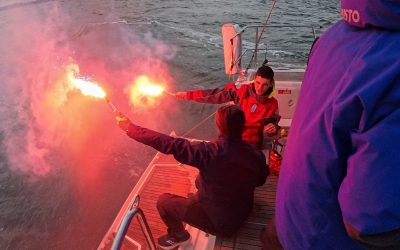
Before racing the ORCV Winter Series opener, the crew aboard Shimmer stepped onto the swim platform for a spectacular, 25-year-old tradition: a live marine distress flare drill off Sandringham. From orange day smoke to high-altitude rockets and brilliant handheld red pyrotechnics, this vital safety training offered a rare, firsthand look at handling hot emergency ordnance on the water.
Time Out goes north
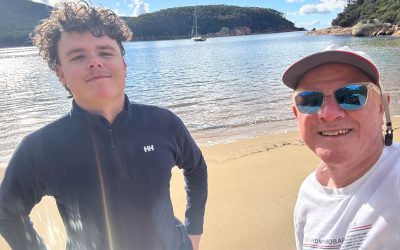
Follow the delivery of the stunning Hanse 458, Time Out X2, on her maiden winter passage under the new owner John Corrie as it leaves from Martha’s Cove to Bermagui. This coastal adventure captures everything from navigating the Rip and anchoring at Refuge Cove to spectacular encounters with breaching whales along the Australian coast.
Port Douglas Race Week 2026
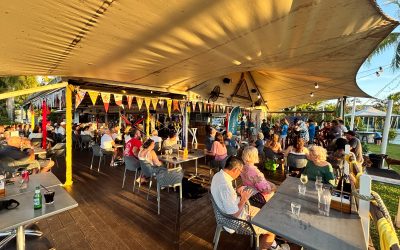
Working the bow aboard Y Knot at Port Douglas Race Week 2026, racing for the iconic Clipper Cup on the Coral Sea. Five days of tropical sailing — from glassy Day One conditions to 25 knots of south-east trade wind. Shaun McKenna reports from one of Far North Queensland’s sailing events.

ORCV Coastal Sprint #3
Sam Backwell’s first ocean race. Six yachts crossing ahead of an inbound cargo ship. Ginan sweeping all three handicap divisions. The third ORCV Coastal Sprint packed a full season’s worth of sailing into 27 nautical miles off the Mornington Peninsula — and Shimmer was right in the thick of it.
Luxury cruising
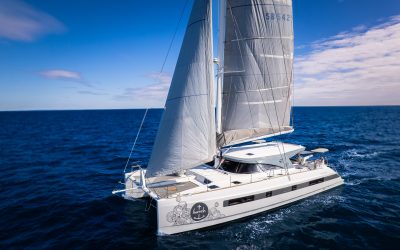
Some boats are built for the marina. Others are built to move. Shooting Baruch — a 2019 Nautitech 542 — for Inspire Marine, it was clear from the first frame which one she is. Fast, refined, and strikingly photogenic, she’s a French multihull design that earns its reputation both offshore and at anchor.
Salt
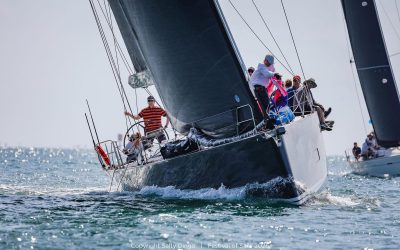
On Salt, a 2021 Solaris 50, I sailed as bow person with James Marshall and Ian Fankhanel. Festival of Sails 2026 saw us win Division 1, thanks to a skilled team including tactician, navigator, and Peter Dowdney. Aaron Cole added sail expertise, highlighting how experience and teamwork make a high-performance yacht excel.