
Delivering ‘Time Out X2’
A Family Affair and Whale-Watching Along the Coast
When her new owner, John Corrie, approached me to handle the technical leg of Time Out X2’s delivery—from Martha’s Cove on the Mornington Peninsula down around the Victorian coast to Bermagui, NSW. John and his friend George were ready to go, but to ensure we had the perfect numbers for a safe watch system, John asked if we could find a fourth crew member.
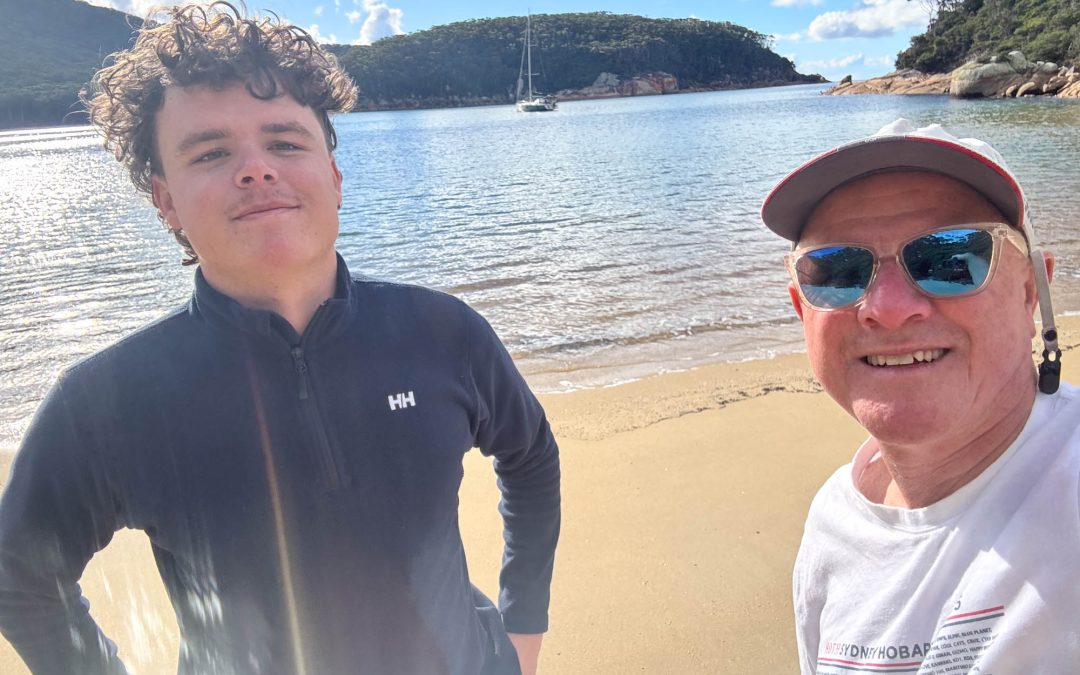
I didn’t have to look far. I asked my 21-year-old son, Frank. As a lifetime sailor and a current coach training junior sailors at the Blairgowrie Yacht Squadron (BYS), Frank’s skills are top-tier, and he was available to step away for the week. Having him beside me on the helm and navigating the deck didn’t just add an extra layer of safety—it made the entire trip infinitely more memorable and fun.
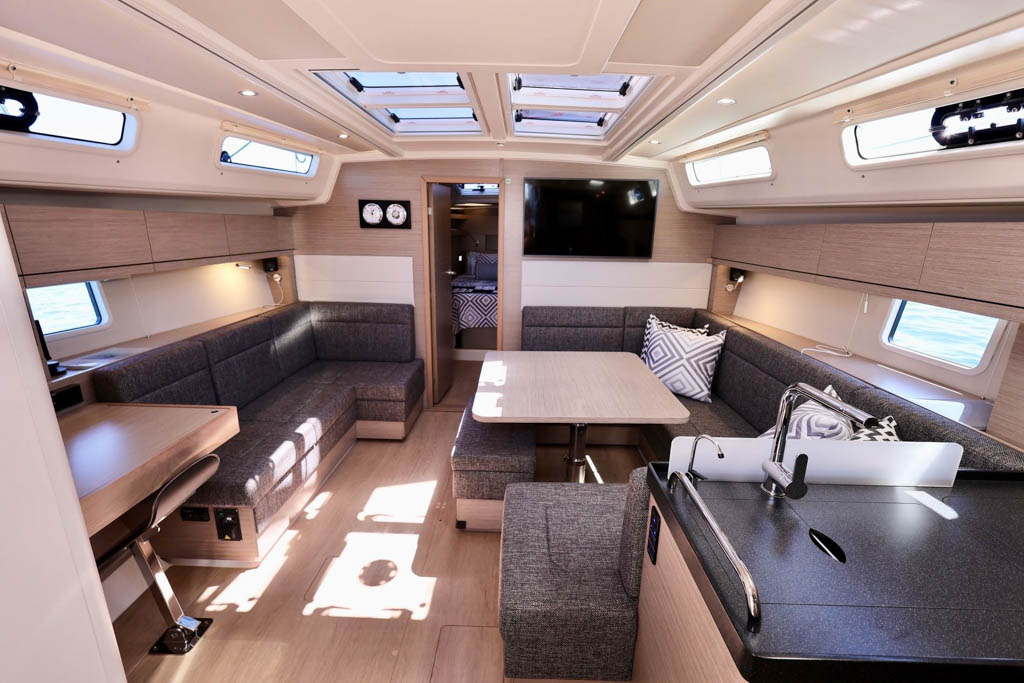
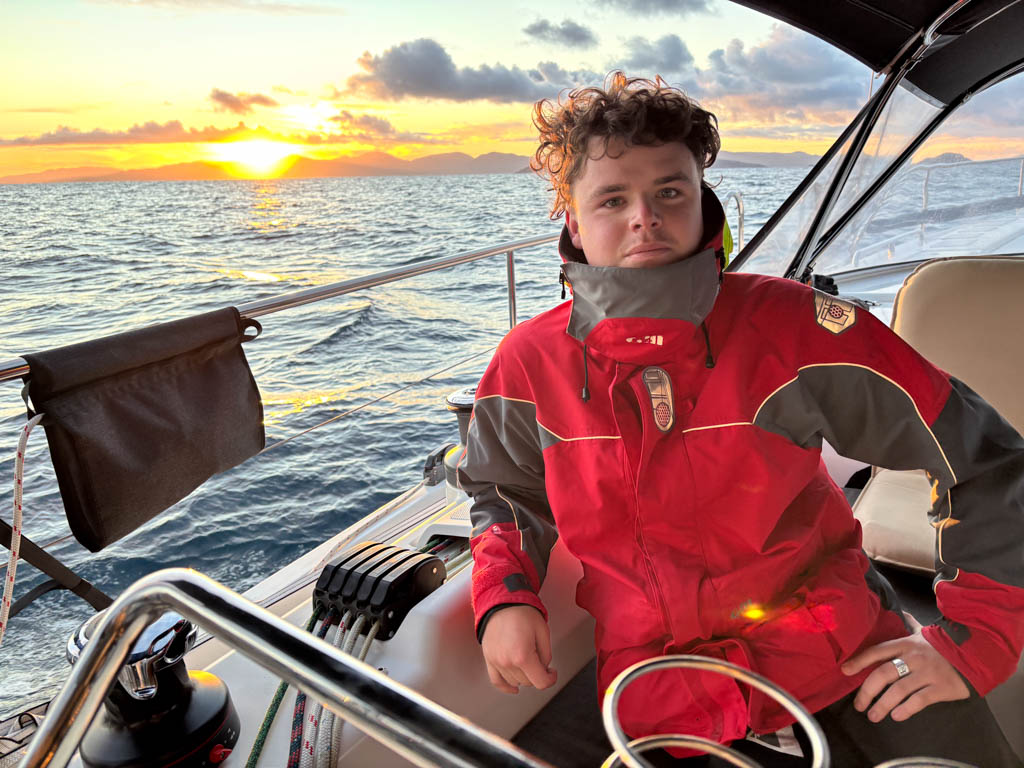
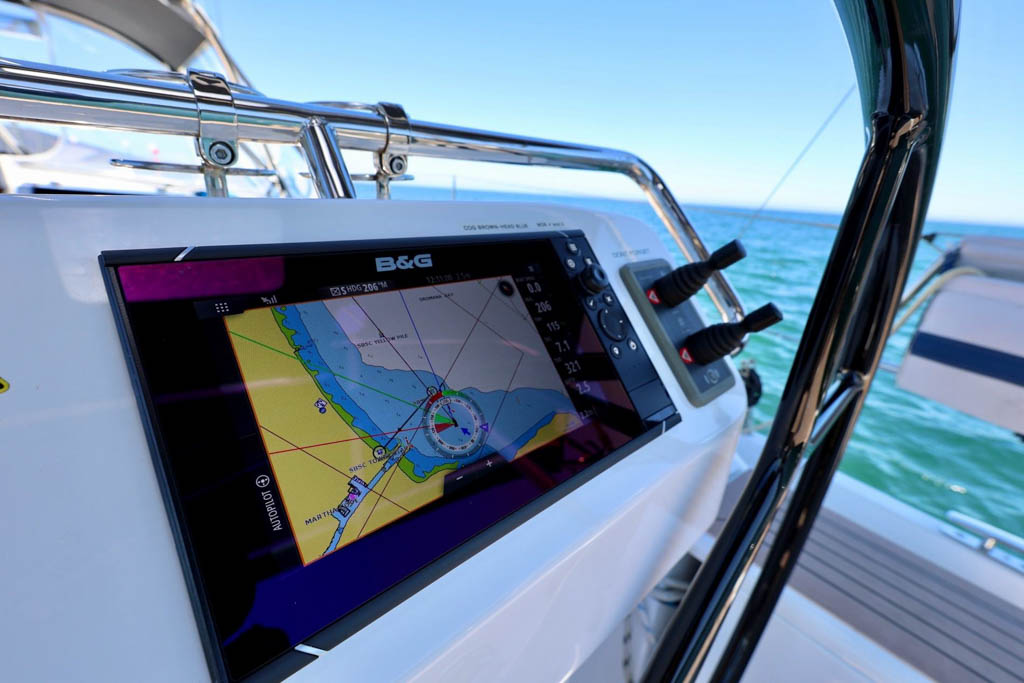
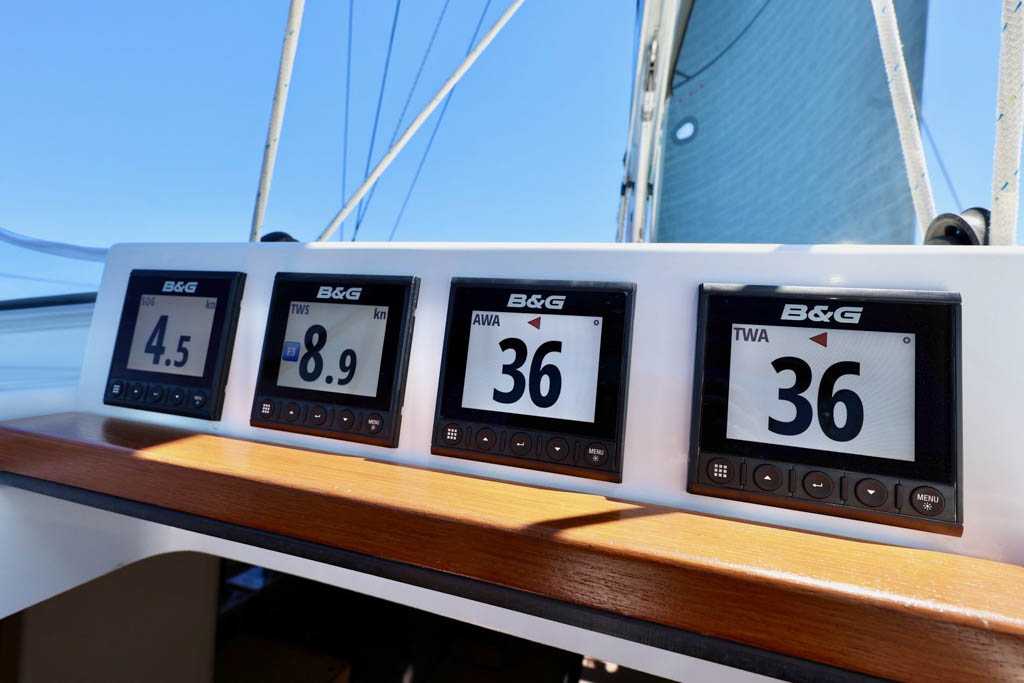
Our journey began on a crisp winter afternoon, slipping our lines at Martha’s Cove Marina at 4:35 pm under a fading June sun. Ahead lay a 19-nautical-mile journey to Port Phillip Heads. Anyone who sails these waters knows that “The Rip” requires absolute respect. Timing is everything. Executing our exit at exactly 7:50 pm during slack water. The Hanse 458 cut through the heads with effortless composure, turning her silver bow eastward into the open ocean.
Our first major strategic milestone was Refuge Cove at Wilsons Promontory. Our decision to stop here was deeply rooted in traditional seamanship: we needed to precisely time our upcoming daylight arrival at Lakes Entrance, ensuring we hit slack water to safely cross its notoriously treacherous bar.

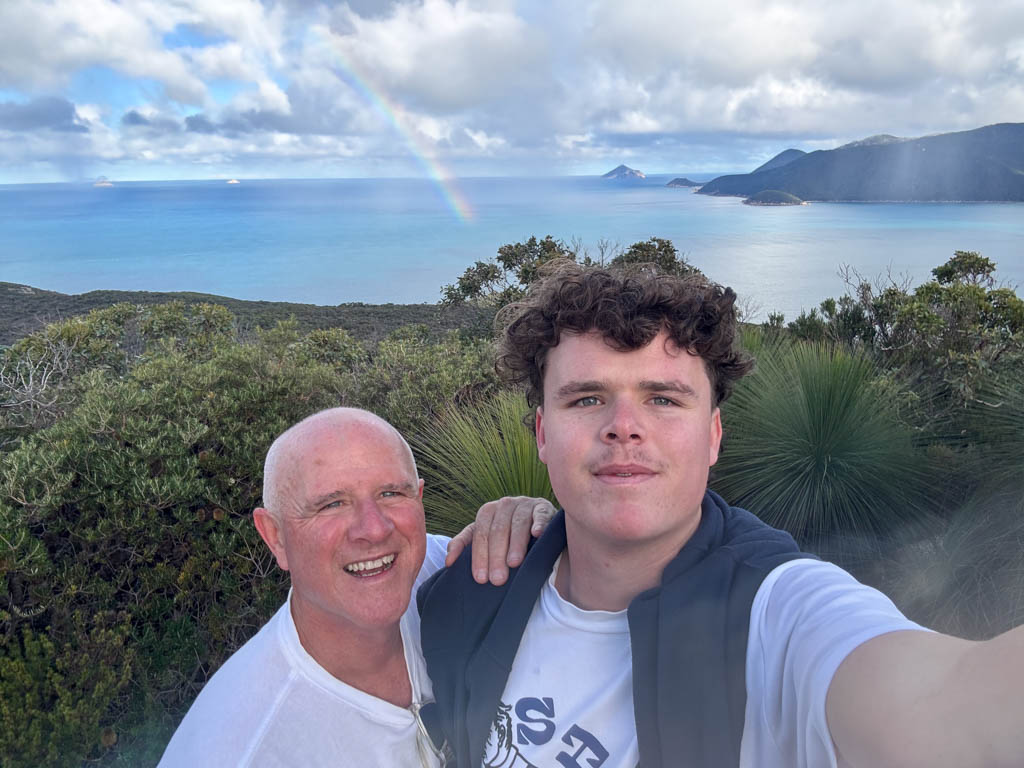
We dropped anchor in the tranquil, sheltered waters of Refuge Cove, giving us a perfect 10-hour window. We couldn’t let a morning in one of Victoria’s most beautiful, remote wilderness outposts pass us by. We rowed our tender ashore and embarked on a brisk hike up the mountain trail. Standing at the peak, we were rewarded with a sweeping, breathtaking outlook across Wilsons Promontory, looking back toward the lonely vigil of the lighthouse.
At 9:30 pm, we lifted anchor and set sail into the dark. The conditions were nothing short of perfect. With a steady breeze filling in, we ran with a full mainsail and jib through the night and into the following day. Time Out X2 showed off her judel/vrolijk design heritage, tracking beautifully and eating up the 100-nautical-mile passage to arrive exactly as planned for the 2:00 pm slack water at Lakes Entrance. Tying up safely after a rewarding run, the four of us headed ashore to a local pub. There is nothing quite like the camaraderie of a post-passage counter meal, a couple of cold drinks, and a few lighthearted games of pool to cement a crew.
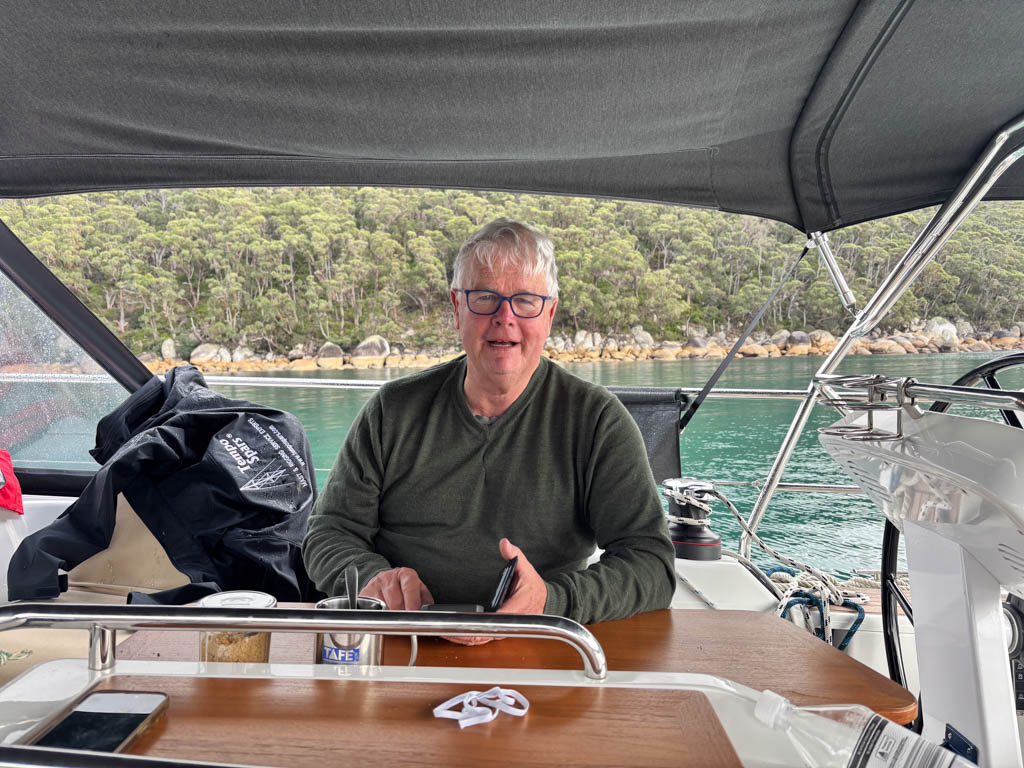

Leaving Lakes Entrance on the next slack water, the ocean welcomed us with open arms. We pushed eastward under full sails for most of the night. In the quiet, early hours of the morning, we sailed past the lonely silhouette of Gabo Island, crossing the border into New South Wales just as the rising sun began to paint the horizon in brilliant hues of gold and orange. As the day warmed up, we decided it was time to play. John’s boat came equipped with a Code Zero sail. So with perfect conditions and lots of time on our hands. We unfurled the code 0, it is the sailing boat and not a motorboat so why not make the most of what we have.
But the ocean wasn’t done putting on a show. As we cruised up the South Coast, we were suddenly surrounded by scores of whales. At one point, we watched in absolute awe as a pod of up to ten whales began jumping, breaching, and thrashing the water into a foam—seemingly rounding up schools of fish right beside us. It was a humbling, front-row seat to nature’s grandest theater.
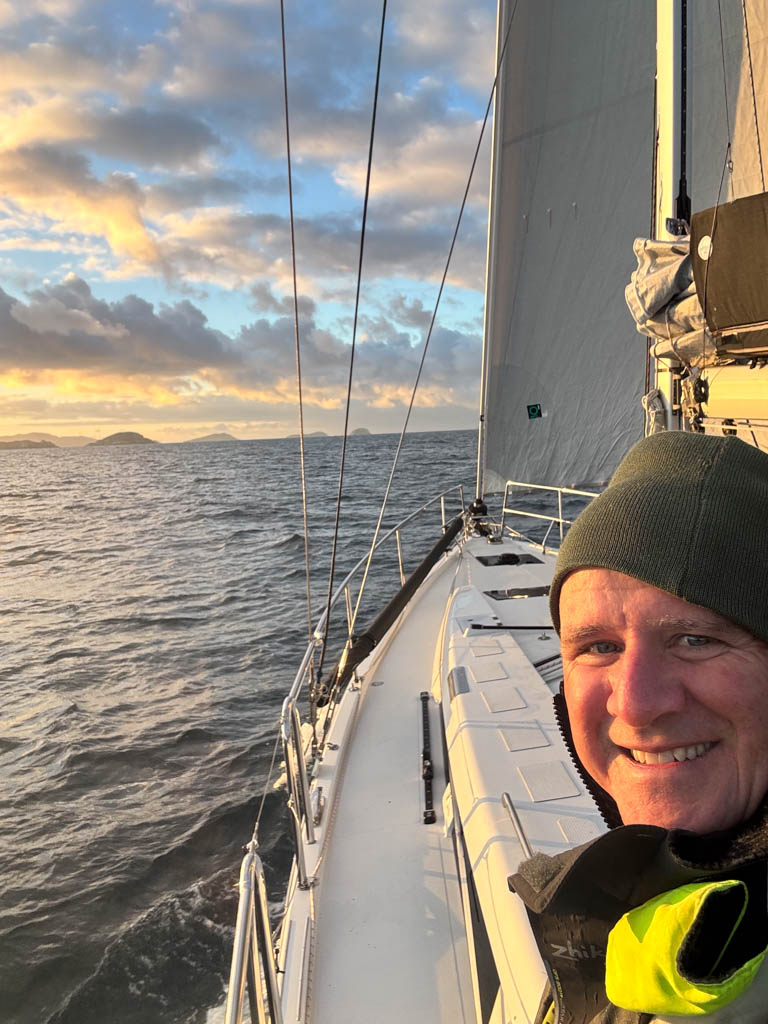
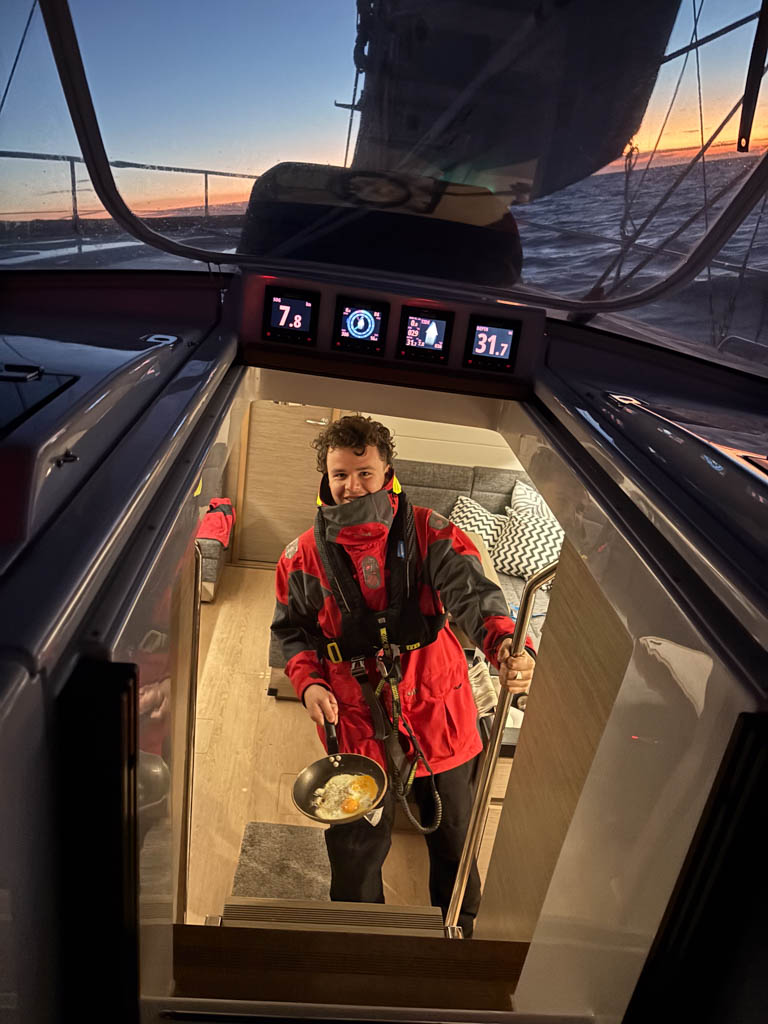
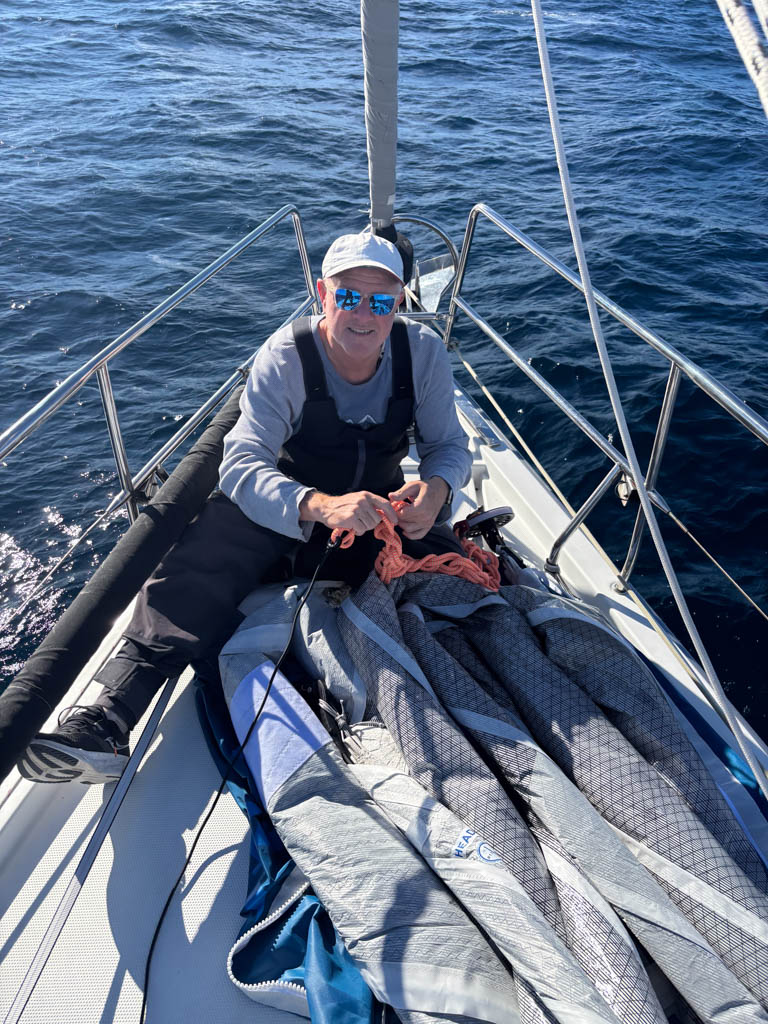

An incredible boat, perfect winter conditions, nature at its finest, and the unforgettable experience of sharing the helm with my son—this is exactly why we answer the call of the sea.
Update from John Corrie — still at Bermagui:
We’re still anchored in Bermagui life, and it turns out we’ve arrived right in the thick of the commercial tuna long-line season. The adjacent wharf is a hive of industrial energy — tractors, trucks, and trawlers all working in concert to get the catch iced down and away. The tuna running here are serious fish, averaging around 130 kg apiece. Boats are bringing in anywhere from 5 to 15 tonnes per trip, all caught on quota. The prime fish head to Ulladulla for sorting, then onward to Japan and the US markets, while the seconds go to Sydney and Melbourne. Ironically, with tonnes of tuna being landed right next door, we’re still trying to wrangle a fresh tuna steak for the barbecue.
As for the spectacular wildlife display — I promised an explanation, so here it is. The warm East Australian Current pushes south along the coast, and where it meets cooler inshore waters it stirs up the nutrients that underpin the whole food chain. Baitfish congregate in these rich feeding grounds, and the tuna and swordfish follow in pursuit. Meanwhile, the whales are drawn to the same waters for the krill. It’s a single, elegant chain playing out before your eyes — and we can only hope it remains sustainable for generations of sailors to come.
Blogs

Shimmer
Shimmer, beautifully maintained by Steve Twentyman, is sailed regularly from Safety Beach Sailing Club. With a versatile sail inventory including J0, Code 0, and asymmetric spinnakers, I’ve gained experience across bow, trimming, and helming roles. Calm leadership and preparation make her a reliable platform for club racing, ORCV coastal events, and Category 2 offshore races.

S2H 2025
White Spirit – 80th Rolex Sydney to Hobart
I completed the 2025 Rolex Sydney to Hobart as 2IC and Navigator aboard White Spirit (Beneteau First 50), skippered by Cyrus Allen. Responsible for routing, weather analysis and sail strategy, I supported the helm and watches through a demanding, multi-system offshore race.

Cabbage Tree Island Race
As part of White Spirit’s Hobart preparation, I helmed through extreme conditions in the Cabbage Tree Island Race, sailing into a rapidly building southerly front with apparent winds peaking at 74 knots. The execution and boat handling through the system resulted in my appointment as Second in Command for Hobart.

Airlie Beach Race Week 2025
Airlie Beach Race Week tested sail handling, coordination, and timing across long island legs. On Y Knot, managing the bow meant staying ahead of multiple sail changes under shifting trade-wind breezes. The combination of fast offshore conditions, complex courses, and a skilled crew made it an intense and rewarding experience.

Magnetic Island Race Week 2025
YKnot’s performance demanded anticipation, precise sail transitions, and constant awareness on the bow. The warm waters, trade winds, and tight fleet kept everyone alert, while the relaxed island atmosphere ashore highlighted why offshore racing is as much about people and experience as it is speed.

Cartouche
Cartouche – Beneteau First 50 (RBYC)
I’ve sailed regularly aboard Cartouche, a Beneteau First 50 owned by Steven Fahey, across club racing, ORCV events and major regattas. Racing within a family-run team sharpened my big-boat awareness and offshore readiness, while reinforcing consistency, preparation and calm decision-making across varied conditions.

Scarlet Runner
Delivering Scarlet Runner back to Melbourne with owner and skipper Rob Date after the Melbourne–Hobart Westcoaster was a masterclass in offshore seamanship. A demanding Bass Strait crossing shifted the focus from racing to judgement, restraint, and boat care, highlighting the balance between performance and protection that defines successful offshore sailing.

Australian Yachting Championships (IRC)
Racing on Tenacity in the 2025 Australian Yachting Championships tested precision and teamwork on Hobart’s Derwent. Handling halyards and sail changes as mast person, I experienced the split-second decision-making, calm control, and clear communication required to keep a high-performance Mills 41 moving efficiently through shifting river breezes.

Melbourne to Hobart Westcoaster
Sailing down the coast on Rushour during the Melbourne to Hobart Westcoaster was a masterclass in offshore performance. Heavy Bass Strait and Southern Ocean conditions tested endurance, decision-making, and watch management, while the multihull’s record-breaking pace reinforced the importance of disciplined boat handling, smart routing, and protecting both crew and craft over a long, exposed passage.

Belle – IY60
Racing offshore on Belle, a 60-foot IY60, was a high-intensity test of big-boat handling. Loads, sail changes, and manoeuvres demanded precision, anticipation, and clear communication. The ORCV Coastal Sprint format sharpened situational awareness, adaptability, and crew coordination, giving valuable experience in managing a large offshore yacht under pressure while maintaining speed and control.
QuiXotic
QuiXotic is a well-sailed X-41, but what stands out most is the crew. Andrew Middleton and the team create a positive, easygoing environment on board, focused on enjoying the racing and sailing well together. It’s a boat where good company and good sailing go hand in hand.
Rushour
On Rushour, I completed the 430nm Southport to Sydney qualifying passage, involved in all aspects of high-performance multihull sailing. From helming in varied conditions to managing asymmetric spinnaker trim and watch rotations, this experience built the discipline and confidence I carried directly into the Melbourne to Hobart Westcoaster.