
Windsurfing
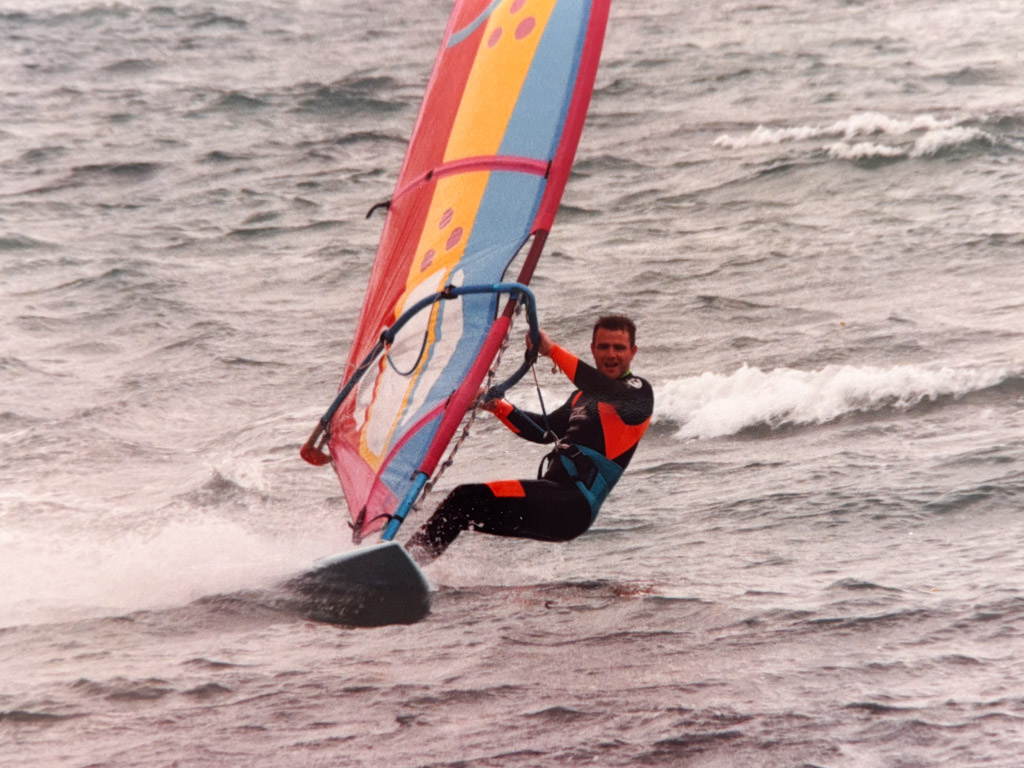

Because Sitting on the Beach Was Never an Option
As a teenager, I spent a lot of time windsurfing along the Mornington Peninsula. This recreational sport taught me a strong sense of balance, spatial awareness, and how to read the wind and water instinctively. While I didn’t compete extensively, windsurfing provided a playful, hands-on way to connect with the water and sharpen core sailing instincts.
As I became more skilled, I purchased Slam boards and Wave Jumpers, mastering water starts, planing, and dynamic manoeuvres in strong conditions. I often turned to sailboarding when sailing was cancelled, using the boards to challenge gusty winds, rough water, and waves. This recreational pursuit strengthened balance, coordination, and wind awareness — skills that translate directly to dinghy and offshore sailing.
Windsurfing, often called sailboarding, blends sailing and surfing into one fast, physical, and highly responsive sport. Using a single sail mounted to a board, windsurfers harness the wind directly through their hands and feet, creating an immediate connection to speed, balance, and the water.
What sets windsurfing apart is how instantly it reacts. Every gust, lull, and shift is felt straight away, demanding constant engagement and awareness. As sailors progress, techniques like planing, harness use, and water starts open the door to stronger winds, higher speeds, and more dynamic conditions.
The sport thrives where many boats can’t — shallow lakes, gusty bays, and exposed coastlines — and often comes into its own when winds are too strong for traditional sailing. Beyond the performance, windsurfing has always carried a strong lifestyle element, driven by chasing wind, swell, and the perfect session.
Though participation has fluctuated over the years, windsurfing’s influence remains strong. Many sailors credit sailboarding with sharpening their instincts for wind, balance, and speed.